Signal Iduna Park stadium guide: Dortmund and the Yellow Wall
Signal Iduna Park Stadium Guide — A guide to Signal Iduna Park: 81,365 seats and the Yellow Wall, the best away blocks, sightlines and getting out again after the final whistle.
Quick facts
| City | Dortmund |
|---|---|
| Stadium | Signal Iduna Park (Westfalenstadion) |
| Capacity | 81,365 |
| Getting there | Public transport from the city centre reaches the ground; check the last service before kick-off. |
signal iduna park stadium guide has to start with a number that has become a fixture of groundhopping: the ground holds 81,365 people for domestic matches, and 24,454 of them stand on one terrace behind the south goal. That terrace is the largest standing area in European football, and it is the reason Borussia Dortmund appear on almost every list of grounds to visit before you stop travelling.
Dortmund built the ground between 1971 and 1974 and opened it on 2 April 1974 as the Westfalenstadion. It was expanded and rebuilt in waves through the 1990s and again in the 2000s, and it now carries a sponsor's name for league matches while UEFA competitions know it as BVB Stadion Dortmund. The record attendance of 83,000 was reached in six different matches, all of them in the years when the ground still had room to squeeze people in.
The dortmund stadium and the block behind the south goal
The dortmund stadium is built on four independent stands rather than a continuous bowl, which is why one side can tower over the others. The south terrace, the Südtribüne, is the reason for the layout's fame, and the club has kept it standing while turning most of the rest of the ground into seats.
An away day here means dealing with a crowd that arrives in a city with a single-club identity, and the noise is constant rather than episodic. The home support does not wait for a goal to sing; on a big European night the ground is loud from the warm-up onwards.
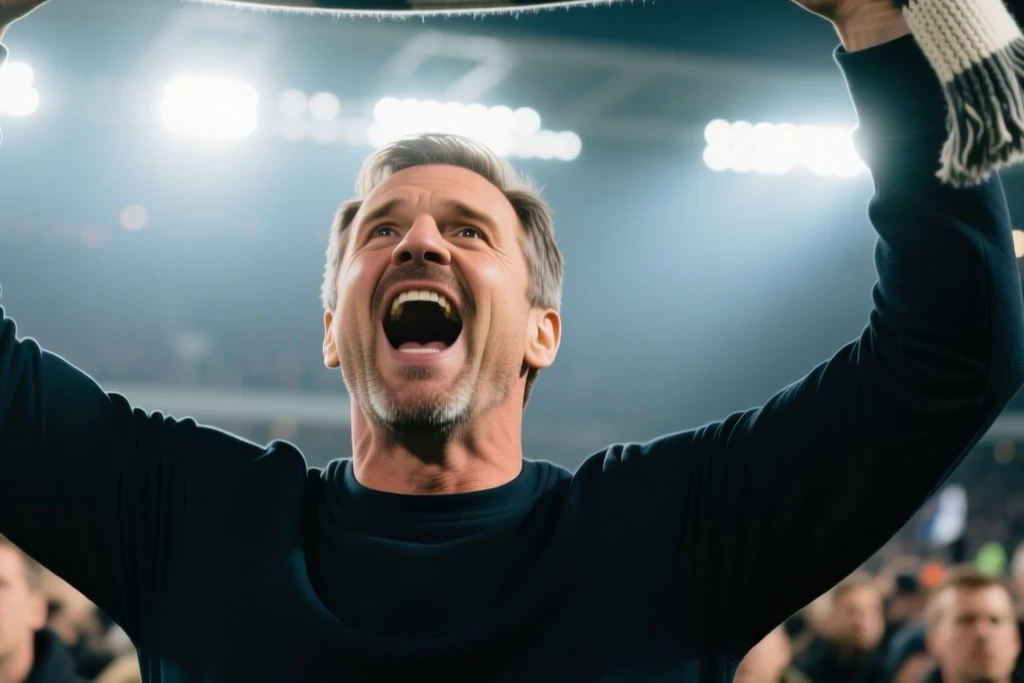
yellow wall guide: what standing at the south end is like
The yellow wall guide usually starts with the practical question of whether you can get in, and the answer is that this is the hardest ticket in Germany. Members get priority, and the terrace holds more people than some entire stadiums, yet it still sells out for league games.
If you do get a place, expect to stand and to be moved by the crowd rather than by your own feet. The terrace is unallocated in practice, so people arrive early to find a rail, and the safety stewards keep the aisles clear without trying to seat anybody. Anyone who cannot stand for two hours should choose a seat on one of the other three sides.
The other three sides and the visiting block
The west stand is the main seated structure, with the press and hospitality areas and the best facilities. The north and east stands are largely seated as well, and the visiting supporters are placed in the corner at the north end, high enough to see the whole ground and separated by a full bank of stewards.
For a neutral who wants to watch the game rather than the terrace, the east stand gives the best combination of price, angle and atmosphere: you look across at the south terrace and see the thing you came for.

Strobelallee and the walk from the station
The ground sits on Strobelallee, a short walk from the Westfalenhallen complex and within reach of the city's main stations by train and tram. Dortmund is a compact city, and the matchday crowd moves along the same few streets in one direction, which turns the last twenty minutes into a procession of yellow.
Allow more time than you think. The approach roads close, the trams fill, and the queues at the turnstiles on the west side can stretch back several hundred metres in the final half hour before kick-off.
Two hours before kick-off
The matchday here has a rhythm, and joining it early is the difference between a good trip and a rushed one. Dortmund's city centre fills from midday, the concourses open early, and the food inside the ground is better and cheaper than most visitors expect.
- Take the train or tram rather than driving; parking around Strobelallee disappears hours before kick-off.
- Get to the ground ninety minutes early if you want to walk around the terraces before they fill.
- Wear neutral colours if you are in the home sections and anything else if you are not.
- Buy food and drink before the queues build up at half-time, when the concourses are packed.
- Check the kick-off slot; Bundesliga weekends run from Friday evening to Sunday evening.
What the stadium capacity means when the ground empties
Eighty-one thousand people leaving at once is the part of the day that catches first-time visitors out. The famous terrace empties slowly because there are no seats to fold up and no rows to shuffle along, and the routes back to the stations are narrow.
| Stand | Type of place | What it gives you |
|---|---|---|
| South terrace | 24,454 standing places | The yellow wall, the songs and the cheapest ticket. |
| West stand | Seated, covered, main stand | Best facilities, press boxes and hospitality. |
| North stand | Seated | Home seats, good view, quieter than the terrace. |
| East stand | Seated | Best neutral angle on both the pitch and the terrace. |
| Visiting block | Corner at the north end | Away support, high view, heavy stewarding. |
The ground is the reason Dortmund sells out a stadium three times the size of the city's expectations, and the club has been careful to protect the one thing that cannot be rebuilt elsewhere. Stand on that terrace once, even in the rain, and the argument about the best ground in Europe stops being an argument.
Related guides
Alte Forsterei stadium guide: one tier, one wall of sound
The Alte Försterei holds 22,012 people and one of the loudest terraces in Germany, a quarter of an hour outside central Berlin.
2026-09-28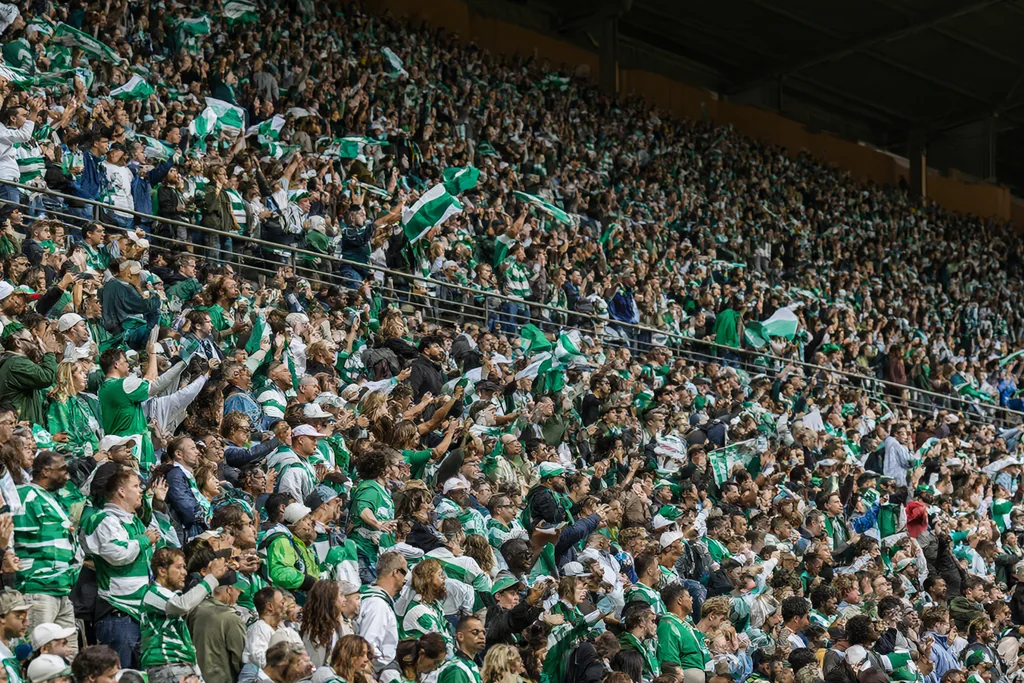
Benito Villamarin stadium guide: Real Betis at home in Seville
The Benito Villamarín seats 60,721 and the south end is the loudest part of a ground that has grown stand by stand since 1929.
2026-09-28
Away Days in Germany: How Visiting Supporters Travel
German away ends are usually sold through the visiting club, and the match ticket frequently doubles as a regional transport ticket.
2026-09-28